

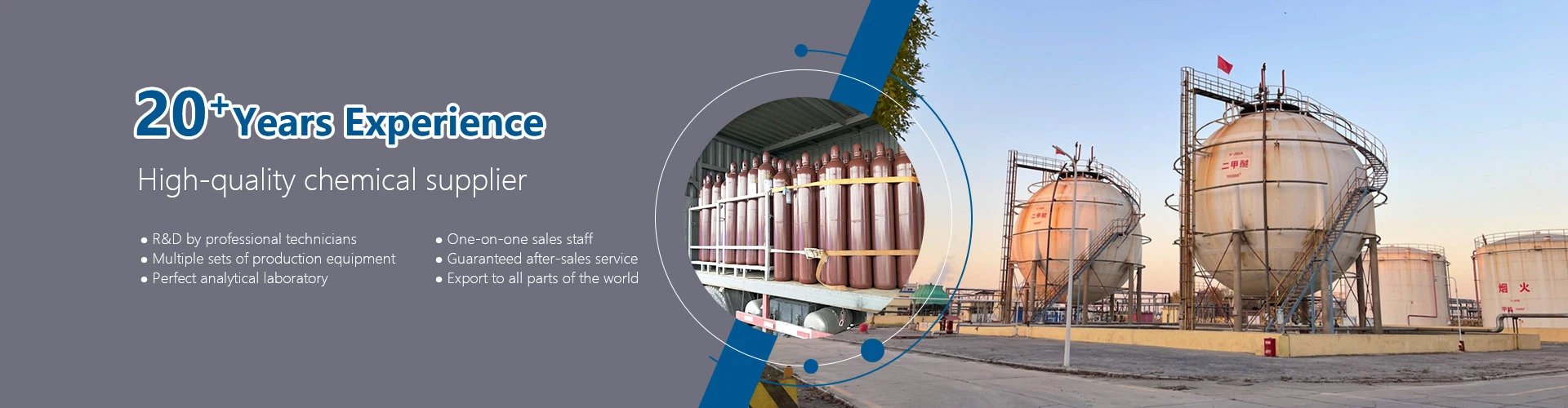
Cyclopentane (C₅H₁₀, CAS 287-92-3) foam is a Class A fire hazard substance, with a flash point as low as -37°C, explosion limits of 1.5%-8.7%, and vapor approximately twice as heavy as air. After a leak, it spreads along the ground to distant locations, and upon encountering an ignition source, "flashback" occurs. The explosion-proof conditions for its storage include: For the tank farm area, above-ground storage tanks for flammable liquids must be equipped with a fire dike. The effective volume inside the dike should not be less than half the capacity of the largest tank (for internal floating roof tanks). The fire separation distance between storage tanks should not be less than 0.4D (where D is the diameter of the larger tank). For electrical equipment, all lighting, ventilation, and motors must be explosion-proof. Tools that are prone to generating sparks are prohibited. For static protection, containers and receiving equipment must be grounded and bonded. Operators must discharge static electricity from their bodies by holding a grounded railing before handling. Inspection of tanks must be carried out 80 minutes after standing. For the storage environment, the warehouse temperature should not exceed 29°C. Storage must be separated from strong oxidizers, acids, alkalis, and halogens; mixed storage is strictly prohibited. Nanjing ZL Energy Co., Ltd. strictly adheres to the GB/T 18825-2024 "Industrial Cyclopentane" standard, providing high-purity cyclopentane products, and reminds customers that explosion-proof and anti-static retrofitting must be completed before use.


1. Hazardous Characteristics of Cyclopentane - What Does a Flash Point of -37°C Mean?
Cyclopentane has a flash point of only -37°C, which means that under most ambient temperatures, it can quickly volatilize and form an explosive mixture with air, igniting immediately upon contact with an ignition source.
Cyclopentane is a Class A fire hazard substance. Its core hazardous parameters are as follows:
| Hazard Characteristic Parameter | Value | Explanation |
|---|---|---|
| Flash Point | -37°C | Extremely low; extremely easily ignited at room temperature |
| Explosion Limits | 1.5%-8.7% | Wide range; easily reaches explosive concentration after a leak |
| Autoignition Temperature | 361°C | Can ignite without an open flame at high temperatures |
| Vapor Density | Approximately 2 (air=1) | Heavier than air; spreads along the ground after a leak, causing "flashback" upon contact with a distant ignition source |
| Boiling Point | 49.3°C | Volatilization intensifies in high summer temperatures |
| Hazard Classification | Class 3 Flammable Liquid | UN 1146, Packing Group II |
The most important hazardous characteristic of cyclopentane is its extremely low flash point - only -37°C. This means that even in the cold winter of northern regions, cyclopentane can quickly volatilize to form an explosive vapor. Its explosion limit range is 1.5% to 8.7% (by volume), making it very easy to reach explosive concentration after a leak.
Another risk requiring special attention is that "the vapor is heavier than air." Cyclopentane vapor has a density approximately twice that of air. After a leak, it "sinks" to the ground like water, spreads along the ground a considerable distance, and upon encountering a distant ignition source, "flashback" occurs instantaneously - the flame travels back along the gas diffusion path to the leak point. This is the most common cause of "secondary accidents" in cyclopentane leak incidents.
2. Tank Farm Design - Fire Dikes and Tank Spacing
Flammable liquid storage tank farms must be equipped with fire dikes. The fire separation distance between storage tanks should not be less than 0.4D, and the number of tank rows within a tank group should not exceed two.
According to the "Fire Prevention Code for Petrochemical Enterprise Design" (GB50160-2008), the design of a cyclopentane tank farm should meet the following conditions:
2.1 Tank Type Selection
Cyclopentane has a fire hazard classification of Class A and is a flammable, volatile liquid with a high risk of fire. The code requires the selection of internal floating roof tanks - the outer part of the tank roof is a dome, and the inner part is a floating roof. The internal floating roof reduces volatilization loss of cyclopentane, while the external dome prevents rain, dust, and other contaminants from entering the tank.
2.2 Fire Dike Design Requirements
| Item | Requirement | Code Basis |
|---|---|---|
| Fire Dike Material | Non-combustible material (e.g., reinforced concrete) | Must withstand liquid static pressure without leakage |
| Effective Volume Inside Fire Dike | For internal floating roof tanks, not less than half the capacity of the largest tank | For a 1000m³ tank, ≥500m³ is required |
| Fire Dike Height | Calculated height plus 0.2m | Typical constructed height is 1.2m |
| Distance from Tank to Fire Dike Inner Toe | Not less than half the tank wall height | Approximately 6m |
| Pipe Penetration Through Dike | Must be tightly sealed with non-combustible material | Prevents leaked liquid from flowing out |
| Pedestrian Steps | Two or more installed in different directions | Facilitates emergency escape |
2.3 Tank Fire Separation Distance
The fire separation distance between two 1000m³ cyclopentane storage tanks should not be less than 0.4D (where D is the diameter of the larger adjacent tank). Based on a tank diameter of 11.5 meters, this is approximately 4.6 meters.
The filling capacity of storage tanks should not exceed 85% of their volume to avoid the risk of "bulging" or bursting due to expansion in high summer temperatures.
3. Electrical Explosion-Proof - Full "Explosion-Proofing" from Lighting to Motors
All electrical equipment in cyclopentane storage areas must be explosion-proof, including lighting, ventilation, motors, switches, etc. The use of any equipment that may generate sparks is prohibited.
3.1 List of Explosion-Proof Electrical Equipment
| Equipment Type | Explosion-Proof Requirement | Reason |
|---|---|---|
| Lighting Equipment | Explosion-proof light fixtures | Ordinary lamps may generate electrical sparks |
| Ventilation Equipment | Explosion-proof fans | Prevents motor sparks from igniting accumulated vapor |
| Drive Motors | Explosion-proof motors | All drive equipment such as pumps and compressors must be explosion-proof |
| Switches | Explosion-proof switches | Switch operation may generate arcs |
3.2 Prohibited Items
According to cyclopentane safety regulations, the following equipment and tools are strictly prohibited in explosion-proof areas:
| Prohibited Item | Reason |
|---|---|
| Mechanical equipment and tools prone to generating sparks | - |
| Non-explosion-proof lighting | Use of candles and ordinary electric lamps for lighting is prohibited |
| Iron tools | Repair tools such as wrenches should be made of copper material to avoid generating sparks during work |
3.3 Lightning Protection and Grounding
Several lightning rods should be installed in the equipment area. All equipment must have lightning protection and anti-static design, complying with relevant national and industry regulations.
4. Static Protection - "Invisible Sparks" Are the Biggest Hidden Danger
Operators must discharge static electricity from their bodies before handling. Tank truck loading/unloading must be equipped with flame arrestors and the engine turned off. Tank inspection and sampling must be carried out 80 minutes after standing.
Cyclopentane极易 generates static electricity accumulation during flow, stirring, and filling. Although the energy of sparks generated by static discharge is small, it is sufficient to ignite cyclopentane vapor.
4.1 Tank Static Protection
Containers and receiving equipment must be grounded and bonded to prevent static charge accumulation.
The anti-static design of storage tanks and pipelines must comply with relevant national and ministerial regulations.
4.2 Operator Static Management
| Operation Step | Anti-Static Requirement |
|---|---|
| Before operation | Must hold a grounded railing to discharge static electricity from the body |
| Clothing requirements | Must not wear shoes with iron nails or synthetic fiber work clothes |
| Tank inspection/sampling | Must be carried out 80 minutes after loading/unloading is complete |
| Filling process | Measures must be taken to prevent static discharge |
4.3 Tank Truck Loading/Unloading Static Management
| Requirement | Description |
|---|---|
| During loading/unloading | Must be equipped with a flame arrestor; vehicle stopped and engine turned off |
| Personnel | Respective functional personnel must not leave their posts |
| After loading/unloading | Only after the tank truck (barrel) is sealed may the vehicle engine be started |
5. Ventilation and Temperature Control - Key to Concentration Control
Cyclopentane storage areas must be equipped with mechanical ventilation to prevent vapor accumulation. The warehouse temperature should not exceed 29°C. Storage tanks must be equipped with water spray cooling facilities in summer.
5.1 Ventilation Requirements
Cyclopentane pump rooms should be equipped with mechanical ventilation to prevent the accumulation of flammable and explosive vapors. Warehouses storing cyclopentane must be cool and well-ventilated, with containers kept sealed.
5.2 Temperature Control
| Control Item | Requirement |
|---|---|
| Warehouse Temperature Upper Limit | Should not exceed 29°C |
| Tank Cooling | Above-ground storage tanks equipped with water spray cooling facilities |
| Liquids with Boiling Point Below 38°C | Should be designed as pressure storage tanks, equipped with safety valves and cooling facilities |
| Summer Measures | In hot seasons, warehouses should be sealed and water spray cooling applied; avoid exposure to sunlight |
Cyclopentane has a boiling point of 49.3°C, and容易 volatilizes during high summer temperatures. Therefore, above-ground storage tanks must be equipped with water spray cooling facilities. Flammable liquid storage tanks with a boiling point below 38°C should be designed as pressure storage tanks, equipped with safety valves and cooling facilities.
6. Fire Protection Facilities and Emergency Preparedness
Cyclopentane tank farms must be equipped with corresponding types and quantities of fire-fighting equipment. The equipment area must be equipped with an oil separation tank to collect leaked materials.
6.1 Fire-Fighting Equipment Configuration
According to cyclopentane safety regulations:
Equip with corresponding types and quantities of fire-fighting equipment.
Extinguishing agents: dry powder, carbon dioxide, foam extinguishing agents (water must not be used).
When fighting a fire, spray water to cool containers and fight the fire from a sheltered position.
6.2 Leak Collection Facilities
Equipment is equipped with an oil separation tank: in the event of a spill, materials can be collected in the tank for recovery.
At the point where the rainwater ditch within the fire dike passes through the dike, measures to prevent flammable liquids from flowing outside the dike should be installed.
The storage area is equipped with leak emergency response equipment and suitable containment materials.
6.3 Safety Valves and Flame Arrestors
To prevent overpressure of tanks containing liquids with boiling points below room temperature, safety valves are installed.
Above-ground storage tanks for respective materials are equipped with flame arrestors (in addition to safety valves).
6.4 Fire Lane
Hedges or dense shrubs should not be planted between the tank group and the surrounding fire lanes. The width of the fire lane should not be less than 3.5 meters. A dead-end lane should be provided with a turnaround lane or a turnaround area not less than 12m × 12m.
7. Special Requirements for Plant Retrofitting - Extremely High Risk of Non-Compliant Use
Plants that have not undergone explosion-proof and anti-static retrofitting must not use cyclopentane. This is extremely dangerous behavior, and the consequences of an accident would be disastrous.
Pure pentane-based products are Class A hazardous substances. Pentane has poor compatibility with polyether and easily escapes, so pre-mixed pentane polyol blends still have relatively high hazard. Enterprises that have not undergone explosion-proof and anti-static retrofitting and engage in the production of pre-mixed pentane polyol blends are violating national regulations on the use of hazardous substances. This poses a huge safety hazard, which could not only cause property loss but also result in casualties.
8. Nanjing ZL Energy Co., Ltd. - A Safe and Compliant Supplier of Cyclopentane
Nanjing ZL Energy Co., Ltd. strictly adheres to the GB/T 18825-2024 "Industrial Cyclopentane" standard, providing high-purity cyclopentane products, and reminds customers that explosion-proof retrofitting must be completed before use.
8.1 Product Compliance
The cyclopentane products supplied by Nanjing ZL Energy Co., Ltd. comply with the national standard GB/T 18825-2024 "Industrial Cyclopentane," with purity ≥99.5%, suitable for various application scenarios such as blowing agents, solvents, and standard gases.
8.2 Safety Reminder
Nanjing ZL Energy Co., Ltd. reminds its customers:
Cyclopentane is a Class A fire hazard substance. Explosion-proof and anti-static retrofitting must be completed before use.
Warehouses storing cyclopentane must be cool and well-ventilated, with a warehouse temperature not exceeding 29°C.
Storage must be separated from strong oxidizers, strong acids, strong alkalis, and halogens; mixed storage is strictly prohibited.
8.3 Manufacturer Services
Relying on its integrated C5 value chain advantage, Nanjing ZL Energy Co., Ltd. provides:
| Service Item | Content |
|---|---|
| High-Purity Products | Cyclopentane purity ≥99.5%, strict impurity control |
| Flexible Packaging | Multiple specifications including cylinders, ISO tanks, and tank trucks |
| Technical Support | Safety usage consulting, explosion-proof storage and transport guidance |
| Complete Qualifications | Hazardous Chemicals License; products comply with GB/T 18825-2024 |
Conclusion
The essential characteristic of cyclopentane - a flash point as low as -37°C - determines that its storage and use must strictly follow explosion-proof specifications.
From the design of tank farm fire dikes, selection of internal floating roof tanks, configuration of explosion-proof electrical equipment, and static grounding protection, to ventilation, temperature control, and fire protection facilities - every aspect of cyclopentane storage must be executed within the framework of safety codes.
For enterprises planning to use cyclopentane as a blowing agent, it is imperative to complete the explosion-proof and anti-static retrofitting of buildings and equipment before putting it into use. The cost savings from non-compliant operation are far from sufficient to cover the potential losses from a single accident.


