

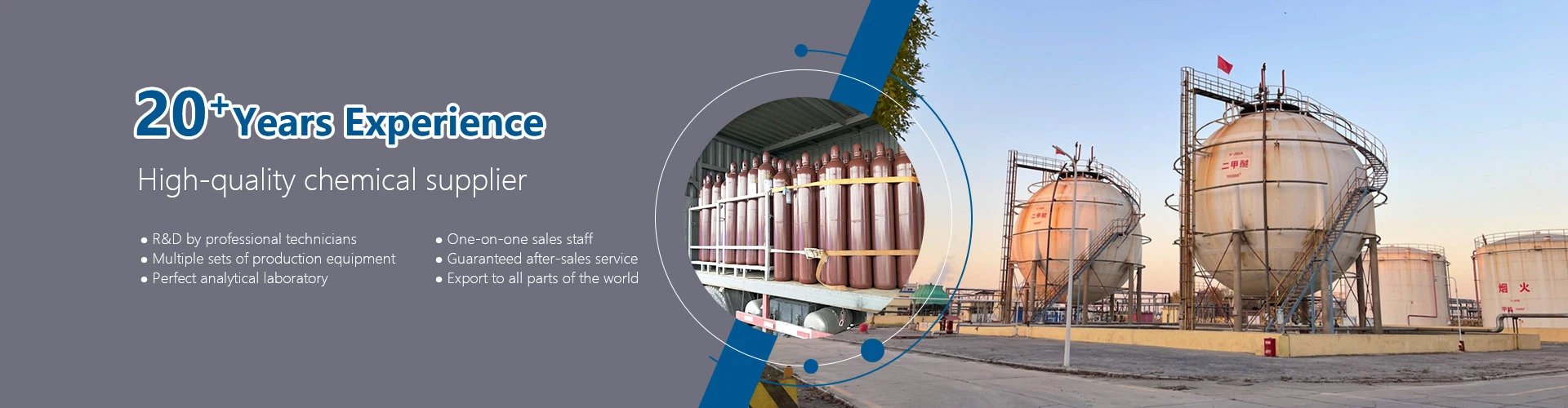
Cyclopentane and isopentane can definitely be mixed. Mixing the two in a specific ratio is a mature technical solution in the field of refrigerator foaming.
Cyclopentane (C₅H₁₀, boiling point 49.3°C) and isopentane (C₅H₁₂, boiling point 27.7°C) are mixed to achieve complementary advantages and cost optimization. The most mature formulation is the cyclopentane/isopentane (70/30) mixed system. Compared with pure cyclopentane, it can achieve a reduction in charging amount of approximately 7% and a reduction in foam density of 10-12%, while maintaining unchanged physical properties. Mixed foaming technology has been applied in the refrigerator industry for over twenty years, and leading companies such as Haier and Midea have adopted this solution. However, it should be noted that both cyclopentane and isopentane are Class A flammable liquids (flash points of -37°C and -51°C respectively). Mixing and use must be carried out in workshops that have undergone explosion-proof and anti-static retrofitting. Nanjing ZL Energy Co., Ltd. specializes in the research and development of hydrocarbon blowing agents, providing customized mixed pentane services for various ratios such as 70/30, helping enterprises achieve both environmental protection and cost benefits.



Chapter 1: Direct Answer - They Can Definitely Be Mixed, And It Is A Mature Industry Solution
Cyclopentane and isopentane can not only be mixed, but mixing the two in a specific ratio has become a mature technical solution in the field of polyurethane foaming for refrigerators and freezers.
As early as 2002, cyclopentane/isopentane blended foaming technology had been applied to the production lines of mainstream refrigerator manufacturers such as Haier. At present, the fine separation technology for mixed pentane isomers has also been industrialized, enabling the production of mixed blowing agent products in various ratios.
Zhonglian Energy's product catalog clearly lists mixed isopentane/cyclopentane (30/70) products. Technical data also confirms that the production processes used for cyclopentane and cyclopentane/isopentane foaming systems are essentially the same.
Chapter 2: Why Mix Them? - Complementary Advantages, Cost Reduction, and Efficiency Improvement
The logic behind mixing them is to optimize the foaming process by utilizing the difference in boiling points - cyclopentane has a high boiling point, providing skeleton support and dimensional stability, while isopentane has a low boiling point, responsible for improving fluidity and cell internal pressure.
2.1 30% Isopentane Addition: The Industry-Recognized "Golden Ratio"
Technical data from ZL Energy shows that a cyclopentane to isopentane weight ratio of 7:3 (i.e., 70/30) is the most widely used formulation in the industry.
| Comparison Indicator | Pure Cyclopentane | Cyclopentane/Isopentane (70/30) | Change Range |
|---|---|---|---|
| Cell Internal Pressure | 0.45 bar | 0.55 bar | ↑ 22% |
| Charging Amount | Baseline | Reduced by approximately 7% | ↓ 7% |
| Foam Density | Baseline | Reduced by 10-12% | ↓ 10-12% |
| Physical Properties | Baseline | Remains unchanged | Equivalent |
Cyclopentane/isopentane blended foaming technology can reduce the amount of polyurethane raw material used by approximately 8% while maintaining the same process conditions and foam physical properties.
2.2 Principle of Effect: How Does Isopentane Addition Improve Foaming?
First, increasing cell internal pressure. The internal pressure of pure cyclopentane-blown foam is approximately 0.45 bar, while the cyclopentane/isopentane (70/30) mixed system can raise it to 0.55 bar. The higher cell internal pressure reduces the influence of external forces on the foam, i.e., decreases the pressure difference between the inside and outside of the cells, thereby improving dimensional stability.
Second, improving fluidity and filling capacity. Isopentane has a boiling point of only 28°C and can vaporize in the early stage of the polyurethane reaction, when the mixture of polyol and isocyanate is still a low-viscosity liquid. The blowing agent works earlier and more uniformly, improving the flowability (filling capacity) of the polyurethane system.
Third, reducing production costs. When using cyclopentane/isopentane foaming technology and keeping the compressive strength above the specified value, the cabinet charge (or density) is reduced by approximately 10% compared to the cyclopentane foaming system. This means less raw material can be used for the same product.
Chapter 3: Difference in Effect - Cyclopentane/Isopentane vs. n-Pentane/Isopentane
There are significant differences in effect between the cyclopentane/isopentane mixed system and the n-pentane/isopentane mixed system - the former has better thermal insulation performance, while the latter has lower cost but higher energy consumption.
According to data comparison from industry technical data:
| Mixed System | Advantages | Disadvantages |
|---|---|---|
| Cyclopentane/Isopentane | Good thermal insulation performance, cabinet energy efficiency meets standards | Relatively higher cost |
| n-Pentane/Isopentane | Advantage in density (filling amount) reduction | Cabinet energy consumption is higher than that using cyclopentane technology |
The n-pentane/isopentane mixed foaming technology was attempted by some manufacturers approximately six months after the introduction of cyclopentane. However, this technology resulted in cabinet energy consumption higher than that of cyclopentane technology. Therefore, in the home appliance field where energy efficiency ratings are pursued, the cyclopentane/isopentane mixed system remains the mainstream choice.
Chapter 4: Safety Issues That Must Be Observed When Mixing
Both cyclopentane and isopentane are Class A flammable liquids. Mixing and use must be carried out in workshops that have undergone explosion-proof and anti-static retrofitting.
4.1 Hazard Classification of Pentanes
According to the risk notice issued by the Guizhou Provincial Department of Ecology and Environment in 2020:
| Product Name | Flash Point | Fire Hazard Class |
|---|---|---|
| Cyclopentane | -37°C | A |
| Isopentane | -51°C | A |
| n-Pentane | -48°C | A |
| Cyclopentane Polyol Blend | Closed cup flash point <28°C | A |
Pure pentane-based products are all Class A hazardous substances. Pentane has poor compatibility with polyether and is prone to escaping, so pre-mixed pentane polyol blends still have relatively high hazard.
4.2 Explosion-Proof Conditions That Must Be Met When Using
Enterprises that have not undergone explosion-proof and anti-static retrofitting and engage in the production and use of pre-mixed pentane polyol blends are violating national regulations on the use of hazardous substances, posing a huge safety hazard.
Necessary conditions include:
| Category | Requirement |
|---|---|
| Electrical Equipment | All lighting, ventilation, and motors must be explosion-proof |
| Static Protection | Containers and receiving equipment must be grounded and bonded |
| Operating Procedures | Must not wear shoes with iron nails or synthetic fiber work clothes; must discharge static electricity by holding a grounded railing before operation |
| Storage Environment | Warehouse temperature should not exceed 29°C; store separately from oxidizers |
| Ventilation Requirements | Mechanical ventilation must be installed to prevent vapor accumulation |
Chapter 5: Manufacturer Advantage - Customized Mixed Pentane Solutions from Nanjing ZL Energy Co., Ltd.
Nanjing ZL Energy Co., Ltd., as a professional supplier of hydrocarbon blowing agents, provides customized services for cyclopentane, isopentane, and mixed pentanes in various ratios.
5.1 Product Matrix
| Product Type | Specifications |
|---|---|
| Pure Products | Cyclopentane (purity ≥99.5%), Isopentane (R601a) |
| Mixed Pentane | Cyclopentane/Isopentane (70/30), Cyclopentane/Isopentane (80/20), and many other ratios |
5.2 Technical Capability and Service
| Key Data | Description |
|---|---|
| Purity Control | ≥99.5%, impurities precisely controlled to ppm level |
| Mixing Ratio | Various ratios available; can be customized according to customer requirements |
| Application Scenarios | Refrigerator foaming, freezer foaming, panel foaming |
| Technical Support | Full-process service from product selection to process optimization |
5.3 Why Choose Nanjing ZL Energy Co., Ltd.?
| Advantage | Description |
|---|---|
| Integrated Industry Chain Advantage | The company relies on the integrated C5 value chain layout to ensure product batch stability |
| Safety Compliance | Products comply with GB/T 18825-2024 "Industrial Cyclopentane" standard; complete qualifications |
| Professional Service | Provides full-process technical support from product selection and safe storage/transport guidance to foaming process optimization |
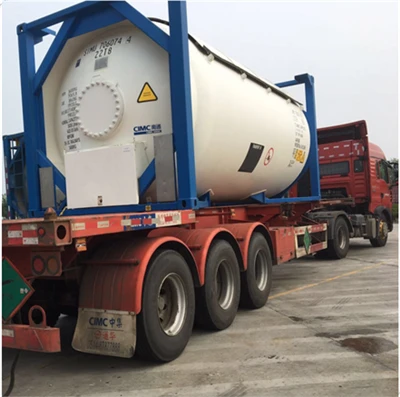
| Flexible Delivery | Various packaging options including cylinders, ISO tanks, and tank trucks, adapting to different production scales |


