

Olefin
Your Professional Olefin Supplier
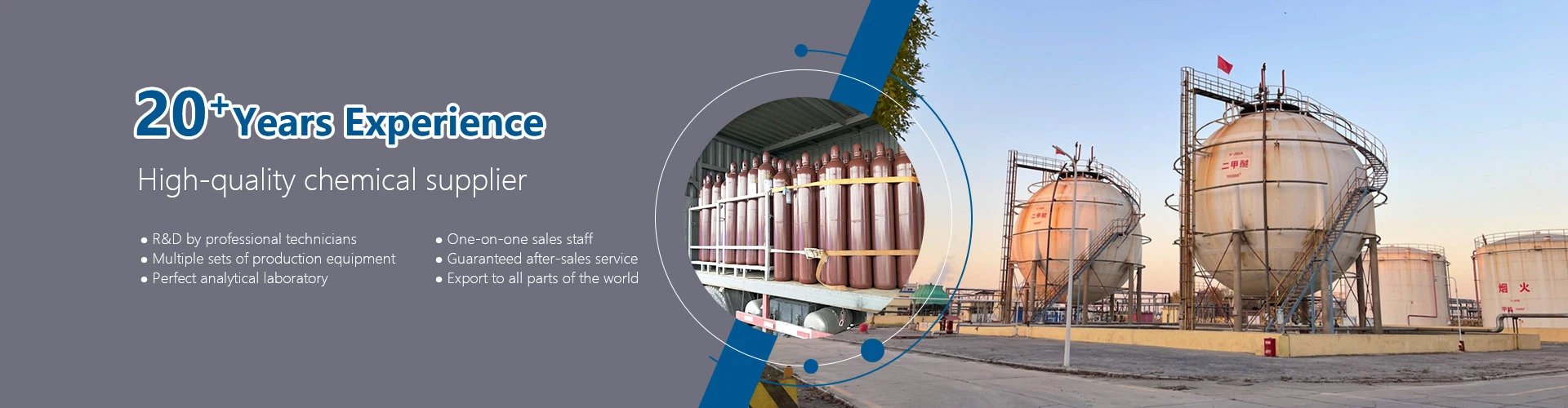
Our goal is to become your true partner in the field of olefin in China. Nanjing ZL Energy Co.,Ltd mainly engaged in the technology research and development, production and sales of refrigerant, foaming agent and other energy products as well as fluorine refrigerant series products. We have a skilled engineering team dedicated to refining every stage, from product development and process improvement to production oversight, ensuring every product delivered meets rigorous quality and performance standards. The price is competitive and the product is quality-assured, which is a good choice for your long-term cooperation.


Why Choose Us
Fast transportation
In order to better serve customers, the company has established its own dangerous goods transportation fleet and established a stable and efficient transportation channel.
Production equipment
We have 4 production lines, pressure horizontal storage tanks, spherical tanks and a complete analytical laboratory.
Our certification
We have ISO, SGS, ROHS and other certifications.
Our services
In the pre-sales stage, our team of experts will recommend the most suitable products according to the needs of customers and provide detailed technical consultation. During the sales period, we ensure timely delivery and provide installation guidance. For after-sales, we provide long-term technical support, warranty services and spare parts to help customers maximize the use of products and get reliable maintenance during use.
Advantages of Olefin
One of the key advantages of olefin is its low cost and abundance. It is a byproduct of oil refining and natural gas processing, which means that it is readily available and inexpensive to produce. This makes it an attractive material for a wide range of applications, particularly those that require large quantities of material.
Properties of Olefin

Types of Olefins
Aliphatic olefins: These are the compounds that do not participate in the resonance. It can be further divided into two parts: Cyclic olefins and acyclic olefins. When these olefins exist in cyclic form these are called cyclic forms and when they exist in an open-chain form these are called acyclic olefins.
Aromatic olefins: These are the unsaturated compounds that exist in the ring form and the double bonds in them are arranged in an alternate manner. Due to such an arrangement, these compounds show resonance. The aromatic olefins are more stable than the aliphatic hydrocarbon due to the resonance energy. Aromatic olefins follow huckel's rule.
Mono olefins and diolefins: Monolefins contain single double bonds and diolefins contain two double bonds. Diolefins are more unsaturated than monolefins.
Use of Olefin
Olefins are known to naturally exist in many life forms. For example, the nutrient known as beta-carotene is an olefin that can be found naturally in carrots. Olefins are known to have several applications in the day-to-day lives of human beings. For example, the olefin known as ethylene is widely used to promote the ripening of fruit, effectively reducing the waiting time required before the consumption of the fruit.
The most important commercial application of olefins lies in the petroleum industry, where they are employed for the production of gasoline with a high octane value. Olefins are also used as feedstock in the production of alkylate (they’re fed as a feedstock into the alkylation unit in this process).

Preparation Method of Olefin

From alkynes
Alkynes can be used for the preparation of alkenes. Alkyne to alkene conversion is carried out by the reduction of alkynes with hydrogen in the presence of palladised charcoal. The charcoal used is moderately deactivated with the help of quinoline or sulphur compounds. This reaction results in the formation of alkenes.
From alkyl halides
Alkenes are obtained by heating alkyl halides with alcoholic potash. Alcoholic potash is obtained by dissolving potassium hydroxide in alcohol. In this reaction, dehydrohalogenation takes place i.e. a single molecule of halogen acid is removed.

From vicinal halides
Vicinal dihalides can be defined as the dihalides in which two adjacent carbon atoms are attached to two halogens. When such dihalides react with zinc metal, they lose halogen molecules which result in the formation of alkenes. Such a reaction of preparation of alkenes from Vicinal dihalides is known as dehalogenation.
From alcohols
Alcohols react with concentrated sulphuric acid which results in the formation of alkenes due to the elimination of a water molecule. As water molecule is removed in this reaction, it is called as acidic dehydration of alcohol and the dehydrating agent is concentrated sulphuric acid.

A double bond can be illustrated as overlapping atomic orbitals. A C-C double bond has one pi bond and one sigma bond. A C-C double bond is stronger than a single covalent bond and has an average length of 133 pm. Three sp² hybrid orbitals are used by each carbon atom in the double bond to make sigma bonds with three additional atoms consisting of two hydrogen atoms and one carbon atom.
Olefin’s physics properties are similar to alkane. Alkane is a saturated hydrocarbon compound with the most simple bond. Olefin and alkane are colorless, combustible, almost odorless, and nonpolar.
The electron pair repulsion model shows that the molecular geometry of olefins has bond angles of approximately 120° around each carbon in the double bond. However, steric interactions between functional groups attached to the carbons in the double bond can cause these angles to change.
Difference Between Olefin and Paraffin
|
Olefins |
Parrafins |
|
Olefin is the term used for the unsaturated hydrocarbon such as alkenes containing two covalent bonds between carbon atoms. |
Paraffin is the term used for alkanes containing only a single bond between carbon atoms. |
|
These are consists of sigma and a pi bond in the structure. |
Paraffins only have a sigma bond in their structure. |
|
Olefins undergo polymerization reactions to form certain important synthetic products. |
Paraffins can not undergo the process of polymerization due to the absence of a pi bond between the carbon atoms. |
Packing and Shipping of Olefin
|
Packing |
Be stored in high-pressure cylinders or tanks |
|
Shipping |
Shipped by road, sea, rail |
FAQ
We're well-known as one of the leading olefin manufacturers and suppliers in China. If you're going to buy high quality olefin at competitive price, welcome to get more information from our factory.