

Alkane
Your Professional Alkane Supplier
Our goal is to become your true partner in the field of alkane in China. Nanjing ZL Energy Co.,Ltd mainly engaged in the technology research and development, production and sales of refrigerant, foaming agent and other energy products as well as fluorine refrigerant series products. We have a skilled engineering team dedicated to refining every stage, from product development and process improvement to production oversight, ensuring every product delivered meets rigorous quality and performance standards. The price is competitive and the product is quality-assured, which is a good choice for your long-term cooperation.


Why Choose Us
Fast transportation
In order to better serve customers, the company has established its own dangerous goods transportation fleet and established a stable and efficient transportation channel.
Production equipment
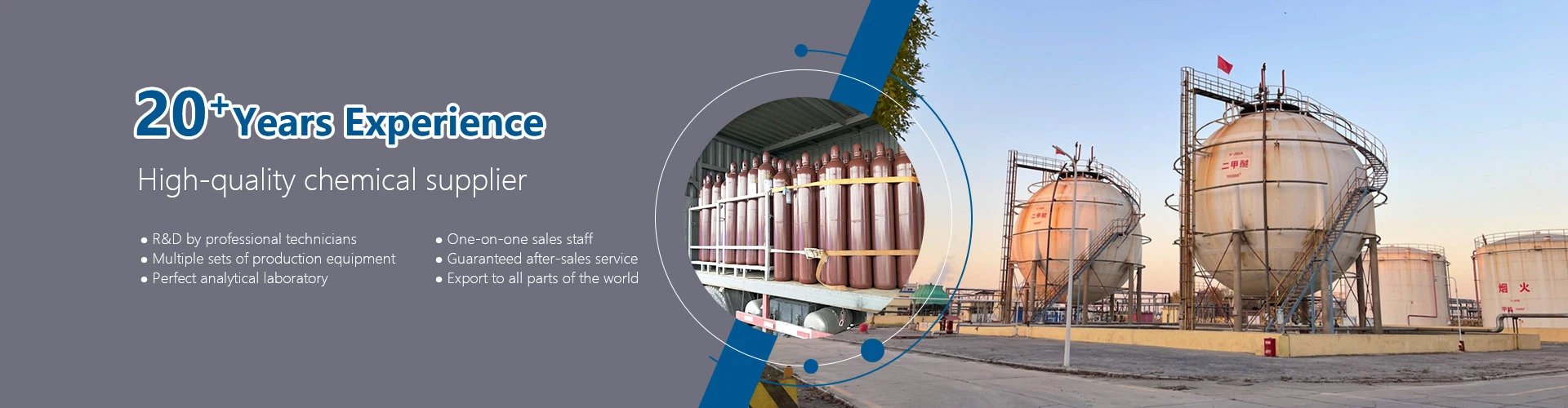
We have 4 production lines, pressure horizontal storage tanks, spherical tanks and a complete analytical laboratory.
Our certification
We have ISO, SGS, ROHS and other certifications.
Our services
In the pre-sales stage, our team of experts will recommend the most suitable products according to the needs of customers and provide detailed technical consultation. During the sales period, we ensure timely delivery and provide installation guidance. For after-sales, we provide long-term technical support, warranty services and spare parts to help customers maximize the use of products and get reliable maintenance during use.
Advantages of Alkane
Alkanes have low reactivity, making them stable compounds. They are used as fuels due to their high energy content. Alkanes are also relatively non-toxic and have low environmental impact when burned. hey are abundant, energy-dense, and relatively inexpensive.
Alkanes Formula and its Condensed Structures
|
Name |
Molecular formula of alkane |
Condensed structural formula of alkane |
|
Methane |
CH4 |
CH4 |
|
Ethane |
C2H6 |
CH3CH3 |
|
Propane |
C3H8 |
CH3CH2CH3 |
|
Butane |
C4H10 |
CH3(CH2)2CH3 |
|
Pentane |
C5H12 |
CH3(CH2)3CH3 |
Types of Alkane
Linear or normal alkanes
These alkanes have a straight chain of carbon atoms without branches. Methane (CH4) is the simplest alkane, followed by ethane (C2H6), propane (C3H8), butane (C4H10), and so forth. As the chain lengthens, the formula remains CnH2n+2.
Branched alkanes
These alkanes have one or more carbon chains attached to the main chain. As molecules become larger, there are more possibilities for the chain to branch into different configurations. A common example is isobutane (Methylpropane), a branched form of butane.
Cyclic alkanes
Also known as cycloalkanes, these compounds form closed rings of carbon atoms. Cycloalkanes have the general formula CnH2n, because forming a ring requires losing two hydrogens compared to linear or branched alkanes with the same number of carbons. An example is cyclohexane (C6H12).

Physical Properties of Alkanes

The solubility of alkanes
Due to very little difference of electronegativity between carbon and hydrogen and covalent nature of c-c bond or c-h bond, alkanes are generally non-polar molecules. As we generally observe, polar molecules are soluble in polar solvents whereas non-polar molecules are soluble in non-polar solvents. Hence, alkanes are hydrophobic in nature that is, alkanes are insoluble in water.
The boiling point of alkanes
The boiling point of alkanes increases with increasing molecular weight, the straight-chain alkanes are observed to have a higher boiling point in comparison to their structural isomers.
The melting point of alkanes
The melting point of alkanes follow the same trend as their boiling point that is, it increases with increase in molecular weight. This is attributed to the fact that higher alkanes are solids and it’s difficult to overcome intermolecular forces of attraction between them.
Use of Alkanes
Alkanes are the principal component in lubricants or oils. Methane and ethane are natural gasses used for cooking. The crude oil mainly consists of alkanes. Alkanes with a high number of carbon atoms are used as anti-corrosive agents. Alkanes such as nonane and hexadecane are used in diesel, kerosene, aviation fuel etc. Alkanes having 6-8 carbon atoms are volatile and are used as solvents for nonpolar solutions. Propane and butane are used as liquified gas.
General Methods of Preparation of Alkanes


Hydrogenation of alkene or alkynes: Alkene and alkynes on reaction with hydrogen and nickel or platinum/palladium catalyst at 200-300oC forms alkane.
Reduction of alkyl halide: Alkyl halide in presence of reducing agents like LiAlH4, Zn+Hcl, Zn+CH3COOH undergo the reduction to form alkane.
Decarboxylation of carboxylic acid: Sodium salt of carboxylic acid when heated with soda lime (NaOH+CaO) alkane is formed. Thus, a produced alkane consists of one carbon less than the original acid.
Hydrolysis of Grignard reagent: The Grignard reagent formed by the reaction of alkyl halide with magnesium in presence of dry ether, when treated with water give alkanes.
Wurtz synthesis: When two molecules of alkyl halide are heated with sodium metal in presence of ether alkane is formed. Two different types of alkyl halides give the mixture of alkanes. As a result, the difficulty in isolating the appropriate alkane product limits the utility of this reaction to the manufacture of symmetrical alkane only.
Packing and Shipping of Alkane
|
Packing |
Be stored in high-pressure cylinders or tanks |
|
Shipping |
Shipped by road, sea, rail |
FAQ
We're well-known as one of the leading alkane manufacturers and suppliers in China. If you're going to buy high quality alkane at competitive price, welcome to get more information from our factory.