

In the rigid polyurethane foam industry, finding alternatives to HFCs (hydrofluorocarbons) is no longer a multiple-choice question-it's a survival question. With the full implementation of the Kigali Amendment, the once-popular HFC-245fa and HFC-134a are facing mandatory phase-out. In this green reshuffle, cyclopentane stands out with its hard-core environmental data. But many engineers still have doubts when selecting: What exactly are cyclopentane blowing agents' environmental advantages? Compared to traditional HFCs, how exaggerated is the gap? Today, we'll use real data to settle this environmental account clearly.
Cyclopentane Delivers a Dimensional Strike Against HFCs in Environmental Attributes-ODP of 0 and Extremely Low GWP Are Its Absolute Trump Cards for Completely Replacing Fluorocarbon Blowing Agents.
When evaluating the environmental friendliness of blowing agents, two core indicators matter: ODP (Ozone Depletion Potential) and GWP (Global Warming Potential). First-generation blowing agents, CFCs (such as F11), had extremely high ODP, punching a hole in the ozone layer. Second-generation HCFCs (such as 141b) had slightly lower ODP but still caused damage. Third-generation HFCs, while reducing ODP to 0, had absurdly high GWP, making them "super greenhouse gases" driving global warming.
Cyclopentane, as a hydrocarbon, not only causes no damage to the ozone layer (ODP=0) but also has a negligible greenhouse effect. Using data from the IPCC (Intergovernmental Panel on Climate Change) Fifth Assessment Report, we can directly compare the environmental DNA of these four generations of blowing agents:
| Blowing Agent Generation | Representative Substance | ODP (Ozone Depletion) | GWP100 (100-Year Global Warming Potential, CO2=1) | Atmospheric Lifetime | Environmental Assessment |
|---|---|---|---|---|---|
| First Generation | CFC-11 (Banned) | 1.0 | 4660 | 45 years | Ozone layer culprit, strong greenhouse gas |
| Second Generation | HCFC-141b (Being phased out) | 0.11 | 725 | 9.2 years | Still depletes ozone, high greenhouse effect |
| Third Generation | HFC-245fa | 0 | 1030 | 7.7 years | No ozone depletion, but extremely strong greenhouse effect |
| Fourth Generation | Cyclopentane | 0 | Approx. 11 | A few days | Zero depletion, extremely low carbon, truly environmentally friendly |
Clearly, HFC-245fa's GWP is nearly 100 times that of cyclopentane! In other words, leaking 1 ton of HFC-245fa damages the climate as much as leaking 100 tons of cyclopentane.
Compared to HFCs' High Carbon Emission Penalties, Cyclopentane Not Only Helps Companies Avoid International Convention Restrictions but Also Tangibly Reduces Carbon Taxes and Compliance Costs.
Environmental protection is not just a moral account-it's an economic one. According to the Kigali Amendment timetable, developed countries have already significantly reduced HFCs since 2020, and developing countries like China officially froze HFC consumption in 2024, with plans to cut 10% by 2029 and 80% by 2045.
If companies continue to cling to HFC systems, they face dual risks: first, supply disruption risk with no quotas available for purchase; second, high carbon emission penalties. Under policies like the EU's Carbon Border Adjustment Mechanism (CBAM), high-GWP products will face astronomical carbon taxes. Cyclopentane's GWP of only about 11 means carbon tax costs are almost negligible. Additionally, cyclopentane's atmospheric lifetime is only a few days-it rapidly degrades into water and carbon dioxide, producing no persistent organic pollutants. This completely eliminates environmental compliance concerns from a full life-cycle perspective.
Cyclopentane's Environmental Advantages Must Be Built on Extremely High Raw Material Purity. If Impurities and Moisture Exceed Limits, Causing Low Foaming Efficiency, It Will Instead Result in Hidden Carbon Emissions and Resource Waste.
Although cyclopentane itself is naturally environmentally friendly, crude cyclopentane produced by many small factories contains hidden pollution. If cyclopentane is contaminated with olefins (such as cyclopentadiene) or heavy component impurities, they will react with the foam stabilizer in polyether, causing coarse foam cells and low closed-cell content.
Once closed-cell content decreases, the foam's thermal conductivity skyrockets. This means refrigerators or cold storage must consume 10% or even 20% more electricity from compressors to maintain the same low temperature. The carbon emissions converted from this increased electricity consumption over the product's life cycle far exceed the GWP difference of the blowing agent itself. This is a classic case of "the blowing agent is environmentally friendly, but the usage process is not." Therefore, to deliver on cyclopentane's environmental promise, high purity is the only entry ticket.
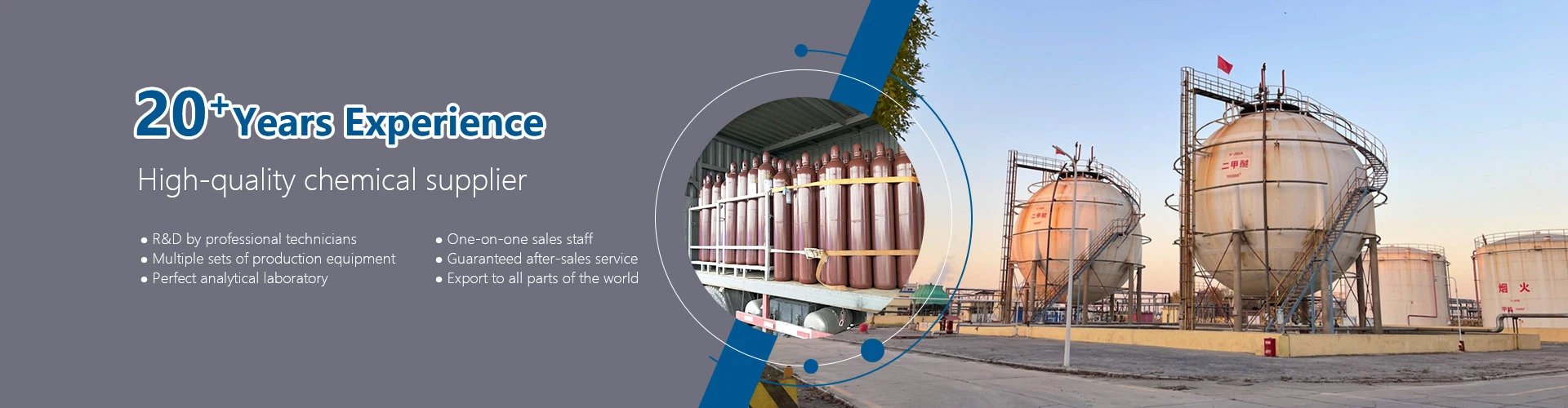
As a Cyclopentane Manufacturer, ZL Energy Ensures Extremely High Purity Through Ultimate Rectification Technology, Maximizing the Practical Value of Environmentally Friendly Blowing Agents and Providing Source-Level Assurance for Downstream Low-Carbon Transformation.
There are many cyclopentane products on the market for HFC replacement, but only a handful can achieve ultimate purity. This is precisely the hard-core moat of ZL Energy as a professional cyclopentane manufacturer.
ZL Energy understands that purity is the lifeblood of environmentally friendly foaming. Relying on its own large-scale, high-efficiency rectification equipment and rigorous multi-stage dehydration and desulfurization processes, ZL Energy locks the main component purity of cyclopentane at over 99.5% (even up to 99.9%), controls moisture within 10 ppm, and virtually eliminates destructive impurities like olefins. Choosing ZL Energy's high-purity cyclopentane means your foaming system will have finer foam cells, higher closed-cell content, and superior insulation performance, truly minimizing the operating energy consumption of refrigerators and panels. Cutting off hidden carbon emissions caused by raw material defects at the source and delivering on low-carbon commitments with high purity-this is the core confidence with which ZL Energy empowers downstream enterprises to win the green transformation battle.


