

What is the difference between R600a refrigerant and R600 refrigerant? Although both belong to hydrocarbon refrigerants and have the same molecular formula C₄H₁₀, they are not the same substance: R600a is isobutane, and R600 is n-butane. Their molecular structures differ, so there are differences in boiling point, vapor pressure, thermodynamic performance, and refrigeration system compatibility.
In refrigerant procurement and equipment selection, R600a is usually associated with household refrigerator refrigeration, while R600 n-butane also has certain refrigeration application value, but the two cannot be considered directly interchangeable simply because their molecular formulas are the same. For refrigeration equipment manufacturers and raw material procurement enterprises, accurately distinguishing R600a from R600 helps avoid selecting the wrong raw material, affecting equipment operation, or bringing safety risks.
I. What Are R600a and R600 Respectively? Start with Chemical Structure
The fundamental difference between R600a and R600 lies in the connection method of carbon atoms: R600a is branched-structure isobutane, and R600 is straight-chain n-butane.
The two are isomers, meaning they have the same molecular formula but different atomic arrangements.
| Basic Information | R600a | R600 |
|---|---|---|
| Chinese Name | Isobutane | n-Butane |
| English Name | Isobutane | n-Butane |
| Refrigerant Number | R600a | R600 |
| Molecular Formula | C₄H₁₀ | C₄H₁₀ |
| CAS Number | 75-28-5 | 106-97-8 |
| Molecular Structure | Branched structure | Straight-chain structure |
| Relative Molecular Mass | 58.12 g/mol | 58.12 g/mol |
| Chemical Category | Alkane | Alkane |
Although the two have the same molecular weight, different molecular structures affect intermolecular forces and phase change properties, thereby causing differences in physical properties such as boiling point and vapor pressure.
II. What Is the Difference in Physical Parameters Between R600a Refrigerant and R600 Refrigerant?
The most intuitive physical property difference between R600a and R600 is the atmospheric boiling point: R600a is about −11.7°C, and R600 is about −0.5°C, a difference of about 11.2°C.
According to ASHRAE refrigerant thermophysical property data and commonly used physical property data in the refrigeration industry, the main parameters of the two are as follows:
| Technical Parameter | R600a (Isobutane) | R600 (n-Butane) |
|---|---|---|
| Molecular Formula | C₄H₁₀ | C₄H₁₀ |
| Molecular Weight | 58.12 g/mol | 58.12 g/mol |
| Atmospheric Boiling Point | About −11.7°C | About −0.5°C |
| Critical Temperature | About 134.7°C | About 152.0°C |
| Critical Pressure | About 3.63 MPa | About 3.80 MPa |
| ODP | 0 | 0 |
| GWP (common historical IPCC basis) | About 3 | About 3 |
| Safety Classification | A3 | A3 |
From the parameters, it can be seen that R600a's atmospheric boiling point is significantly lower than R600's, so in lower-temperature refrigeration applications, the evaporation pressure conditions and system operating characteristics required by the two are not the same. This is also why it cannot be judged that they can be interchanged in refrigeration equipment simply because both are C₄H₁₀.
III. Why Is R600a More Commonly Used in Household Refrigerators, While R600 Applications Differ?
R600a's boiling point and thermodynamic characteristics are more suitable for the refrigeration cycle design of many household refrigerators, so it is more common in the household refrigerator field; R600 needs to evaluate applicability according to target temperature and system design.
1. R600a Is Suitable for Refrigeration Equipment Such as Household Refrigerators
R600a has an atmospheric boiling point of about −11.7°C and can meet the refrigeration cycle needs of household refrigerators under appropriate evaporation pressure. It has mature applications in the household refrigerator field, and related equipment is designed around R600a's physical properties for compressors, capillaries, heat exchangers, and charge amounts.
2. R600's Refrigeration Applications Need to Be Judged in Combination with Equipment Working Conditions
R600 n-butane has an atmospheric boiling point of about −0.5°C. Compared with R600a, its evaporation temperature and pressure characteristics differ. It can be studied as a refrigerant working fluid or used in specific refrigeration systems, but R600a refrigerator design parameters cannot be simply applied. Actual applications need comprehensive evaluation of evaporation temperature, condensation temperature, compressor performance, cooling capacity, and system efficiency, rather than judging superiority or inferiority solely by boiling point.
3. Application Differences Between the Two Refrigerants
| Application Dimension | R600a Isobutane | R600 n-Butane |
|---|---|---|
| Household Refrigerators | Common application | Not a mainstream choice |
| Small Refrigeration Equipment | Mature applications | Needs evaluation according to specific systems |
| Specific Refrigeration Cycles | Can be used according to design | Can be evaluated according to design |
| Selection Focus | Refrigerator system matching, charge amount, and safety design | Working condition compatibility, evaporation pressure, and system efficiency |
IV. Which Has Better Cooling Effect, R600a or R600?
It cannot be simply determined that R600a or R600 has better cooling effect. Actual cooling capacity depends on the matching degree of refrigerant physical properties with compressors, heat exchangers, and operating conditions.
When judging refrigerant performance, the following indicators typically need attention:
Unit Mass Cooling Capacity: The heat that can be absorbed by a unit mass of refrigerant in the evaporator.
Unit Volumetric Cooling Capacity: One of the key parameters affecting compressor displacement and system cooling capacity.
Evaporation Pressure: Affects compressor suction state and system operating range.
Condensation Pressure: Affects compressor compression ratio and operating load.
COP (Coefficient of Performance): Used to measure the relationship between system cooling capacity and input power.
R600a and R600 have different boiling points, critical temperatures, and vapor pressures. Even at the same evaporation and condensation temperatures, cycle parameters will not be completely identical. Therefore, during the equipment development stage, applicable solutions should be determined through refrigerant physical property calculations, compressor performance testing, and unit energy efficiency testing, and judgment cannot be made based on a single physical property indicator.
V. What Is the Difference in Environmental Performance and Safety Classification Between R600a and R600?
Both R600a and R600 belong to natural hydrocarbon refrigerants, with ODP of 0 for both and GWP of about 3 under common historical assessment bases, but both belong to Class A3 highly flammable refrigerants.
| Comparison Item | R600a | R600 |
|---|---|---|
| Refrigerant Type | Hydrocarbon refrigerant | Hydrocarbon refrigerant |
| Ozone Depletion Potential (ODP) | 0 | 0 |
| Global Warming Potential (GWP) | About 3 | About 3 |
| ASHRAE Safety Classification | A3 | A3 |
| Toxicity Classification | Class A (lower toxicity) | Class A (lower toxicity) |
| Combustion Risk | Highly flammable | Highly flammable |
What Should Be Noted When Using the Two Refrigerants?
Both R600a and R600 have relatively high flammability, and corresponding fire and explosion prevention measures need to be taken during storage, transportation, charging, and maintenance. Main measures include:
Keep storage areas ventilated, away from open flames, high temperatures, and other ignition sources.
Use compliant pressure vessels and connection equipment to prevent leakage.
Equip operating areas with applicable explosion-proof facilities and leak detection measures.
Before equipment maintenance, perform refrigerant recovery, evacuation, and safety confirmation according to manufacturer regulations.
Control refrigerant charge amount according to equipment design and applicable standards.
Special Reminder: R600a and R600 cannot be directly interchanged. Even though both belong to Class A3 refrigerants, it cannot be assumed that compressors, capillaries, lubricating oils, and charge amounts are interchangeable. Refrigerant replacement must be confirmed by the equipment manufacturer and subjected to corresponding safety and performance verification.
VI. What Quality Indicators Should Be Focused On When Purchasing R600a and R600?
When purchasing R600a or R600, one should not only compare product purity but also focus on isomer composition, moisture, sulfur content, non-condensable gases, and batch stability. Especially since R600a and R600 have the same molecular formula, if the product isomer composition does not meet requirements, even if the total hydrocarbon purity is high, it does not mean it meets the quality specifications of the target refrigerant.
| Quality Indicator | R600a Procurement Focus | R600 Procurement Focus |
|---|---|---|
| Main Component | Isobutane content | n-Butane content |
| Isomer Content | Control of n-butane and other impurities | Control of isobutane and other impurities |
| Moisture | Prevent moisture from affecting system operation | Prevent moisture from affecting system operation |
| Sulfur Content | Control sulfur-containing impurities | Control sulfur-containing impurities |
| Non-Condensable Gases | Control oxygen, nitrogen, and other components | Control oxygen, nitrogen, and other components |
| Unsaturated Hydrocarbons | Control related impurities | Control related impurities |
| Batch Stability | Ensure consistent composition between batches | Ensure consistent composition between batches |
Are the Purity Requirements for R600a and R600 the Same?
The two do not have directly interchangeable unified purity requirements and should be determined separately according to product use, customer technical agreements, and applicable standards. For example, R600a refrigerant needs to focus on controlling n-butane and other isomer impurities; R600 n-butane needs to focus on confirming n-butane main component and isobutane and other impurity content.
During procurement, it is recommended to request the following documents:
TDS: Product Technical Data Sheet;
SDS: Safety Data Sheet;
COA: Batch Quality Test Report;
Main component and isomer composition test results;
Moisture, sulfur content, and non-condensable gas test results;
Batch traceability and quality acceptance records.
For refrigerator manufacturing enterprises, it is recommended to correlate refrigerant specifications with compressor, lubricating oil, and unit design requirements, rather than simply using the total purity of industrial-grade products as the acceptance basis.
VII. As a Manufacturer and Supplier of R600a Refrigerant and R600 n-Butane, What Product Advantages Does ZL Energy Have?
For refrigerant procurement enterprises, the key to choosing R600a and R600 suppliers lies in whether they can accurately distinguish isobutane from n-butane and provide corresponding specifications, testing documents, and supply solutions according to different uses. Nanjing ZL Energy Co., Ltd. supplies isobutane R600a and n-butane R600 products, and can provide product docking for refrigerant and related hydrocarbon raw material procurement.
1. Simultaneous Coverage of R600a Isobutane and R600 n-Butane Products
| Product Information | R600a Isobutane | R600 n-Butane |
|---|---|---|
| Product Name | Isobutane | n-Butane |
| English Name | Isobutane | n-Butane |
| CAS Number | 75-28-5 | 106-97-8 |
| Molecular Formula | C₄H₁₀ | C₄H₁₀ |
| Purity | ≥99.9% | ≥99.95% |
| Moisture | ≤20 ppm | ≤10 ppm |
| Sulfur Content | ≤1 ppm | ≤1 ppm |
| Boiling Point | −11.7°C | −0.5°C |
2. Product Packaging and Transportation Methods Can Be Communicated According to Order Requirements
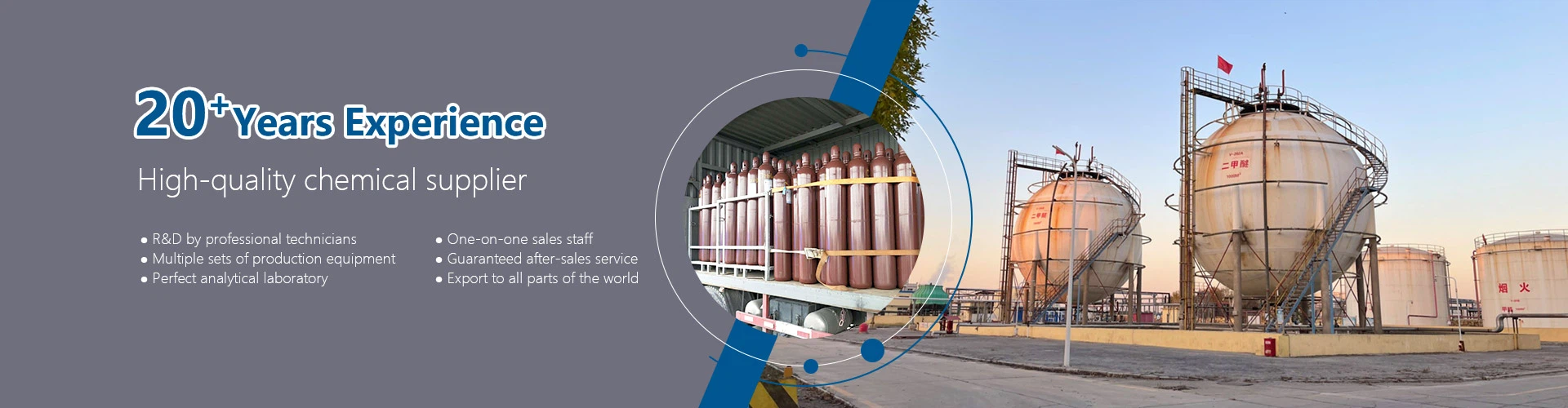
There are 118L, 400L, 800L, and 926L steel cylinders, as well as ISO tanks and tanker trucks and other packaging or transportation methods. Specific packaging forms, transportation conditions, and available quantities are recommended to be further confirmed according to order requirements.
VIII. R600a Refrigerant and R600 Refrigerant FAQ
1. Are R600a and R600 the same refrigerant?
No. R600a is isobutane, CAS number 75-28-5; R600 is n-butane, CAS number 106-97-8. Both have the same molecular formula, but different molecular structures, physical properties, and refrigeration system compatibility.
2. Why do R600a and R600 have the same molecular formula?
Because they are isomers. Both are composed of 4 carbon atoms and 10 hydrogen atoms, but the carbon atom connection methods differ, thus forming two compounds: isobutane and n-butane.
3. What Are the Boiling Points of R600a and R600 Respectively?
R600a's atmospheric boiling point is about −11.7°C, and R600's atmospheric boiling point is about −0.5°C, a difference of about 11.2°C.
4. Which Is More Suitable for Household Refrigerators, R600 or R600a?
R600a is a relatively mature refrigerant used in household refrigerators. R600 n-butane cannot directly replace R600a, and whether it is applicable needs to be evaluated according to the design parameters and safety requirements of the refrigeration system.
5. Can R600a and R600 Be Mixed?
Cannot be mixed by oneself. After mixing, the refrigerant composition, pressure, and thermodynamic performance may change, and mixtures that have not undergone system design and verification cannot be directly used in original equipment.
6. Are Both R600a and R600 Environmentally Friendly Refrigerants?
Both are hydrocarbon refrigerants with ODP of 0 and very low GWP. However, environmental performance does not mean no safety risks; both belong to Class A3 highly flammable refrigerants.
7. How to Determine Whether I Am Buying R600a or R600?
First verify the product name, English name, and CAS number, then check the main component and isomer composition in the COA. Judgment cannot be made solely by the C₄H₁₀ molecular formula or product appearance.
IX. The Key Difference Between R600a Refrigerant and R600 Refrigerant Lies in Molecular Structure and System Compatibility
Although R600a refrigerant and R600 refrigerant have the same molecular formula C₄H₁₀, they are not the same chemical substance. R600a is isobutane with a branched structure and an atmospheric boiling point of about −11.7°C; R600 is n-butane with a straight-chain structure and an atmospheric boiling point of about −0.5°C.
In terms of applications, R600a is a relatively mature hydrocarbon refrigerant in household refrigerators, while R600 needs to evaluate applicability according to the evaporation temperature, condensation pressure, and equipment structure of specific refrigeration systems. Both have environmental characteristics of ODP of 0 and relatively low GWP, but both also belong to Class A3 highly flammable refrigerants and must be used according to equipment design and safety specifications.
For procurement enterprises, when selecting R600a or R600, focus should be on verifying CAS numbers, main component content, isomer ratio, moisture, sulfur content, and batch test reports. ZL Energy supplies isobutane R600a and n-butane R600 products and can provide product specification consultation and procurement docking for related enterprises.


