

Those of us working in polyurethane foaming or refrigerant procurement have certainly encountered this surreal scenario when searching for n-butane suppliers online: hundreds of suppliers appear in search results, all claiming to be the primary source, but when samples are tested, moisture exceeds standards, odors are pungent, and when added to polyol blends, the foam becomes brittle and collapses. What are the suppliers of n-butane? Where can you buy reliable material that doesn't require constant monitoring of quality inspection reports? Today, we will expose the truth of this industry and explain the procurement essentials.
n-Butane suppliers on the market are mainly divided into three categories: refinery by-product type, C4 fine separation type, and gas traders. Choosing the wrong type directly determines the batch stability of your raw materials.
When looking for a supplier, first check where their material comes from. n-Butane mainly comes from petroleum refineries and ethylene cracking units. Suppliers from different sources have vastly different purities. Don't just look at the unit price blindly.
| Supplier Type | Source of Supply | Typical Purity Limit | Core Advantages and Disadvantages Analysis | Suitable Purchasing Groups |
|---|---|---|---|---|
| Refinery By-Product Type | Light hydrocarbon by-products from catalytic cracking or atmospheric/vacuum distillation | Typically ≤95% | Advantages: Large volume, extremely low price. Disadvantages: Contains large amounts of isobutane, pentane, and olefins, with extreme batch fluctuations and no quality control. | Low-end fuel, crude combustion with no purity requirements. |
| Fine Separation Type (Source Manufacturer) | Precision distillation extraction from C4 fractions | Can reach ≥99.5% | Advantages: Extremely low impurities, controllable moisture and sulfur content, highly stable batches. Disadvantages: Need to bear purification costs, slightly higher unit price. | Polyurethane foaming, refrigerants, high-purity standard gases. |
| Gas Traders | Sourcing and repackaging from various source plants | Mixed (90%-99%) | Advantages: Fast spot response, easy to buy in small cylinders. Disadvantages: Unstable supply, risk of secondary contamination during filling, price includes middleman markup. | Laboratories with very small volumes or temporary replenishment. |
If your application is as a blowing agent or refrigerant, buying crude material from a refinery is asking for trouble. Buying from traders means bearing the risk of replacement. Only fine separation type source manufacturers are the right path.
The most reliable channel for purchasing n-Butane is to sign a long-term direct supply agreement with a source factory that has fine separation capabilities, rather than searching for spot supplies from various sources.
Now that we understand the supplier classification, the next question is where to buy. Bulk hazardous chemicals are not as simple as ordering on Taobao. Formal and stable channels typically involve listing and matching through chemical trading centers such as the Dalian Commodity Exchange, or directly signing annual/quarterly long-term direct supply agreements with source factories.
The spot market is too deep. Many traders take goods from one factory today and another tomorrow, and to compete on price, they even mix in high-olefin crude butane. If you are a long-term contract customer, it is strongly recommended to bypass middlemen and directly connect with production lines. When purchasing, don't just ask "how much per ton of n-butane"; you must state your application:
Foaming Grade n-Butane: Requires purity ≥99%, with core control of moisture (≤30 ppm) and olefin content. Otherwise, polyurethane blends can easily fail.
Refrigerant Grade n-Butane: Requires purity ≥99.5%, referencing "Refrigerant Numbering Method and Safety Classification" (GB/T 7778), with extremely strict sulfur content requirements to prevent compressor copper plating.
The biggest hidden risk in purchasing n-Butane is not price fluctuation, but catalyst poisoning and equipment corrosion caused by excessive trace impurities (water, sulfur, olefins).
Many procurement professionals, when comparing prices, only look at the 99% purity number while ignoring the "impurity items" behind it. This is the deepest pit in the industry. According to standards such as "Industrial n-Butane" (SH/T 0553), moisture and sulfur content are hard indicators.
Crude n-butane often contains trace amounts of 1-butene or isobutylene. In polyurethane foaming, these olefins with double bonds are extremely reactive and will rapidly consume the amine catalysts in the system, causing the foaming material's cream time to lengthen, eventually leading to foam cracking. As for sulfides, even 2-3 ppm of hydrogen sulfide or mercaptans in n-butane will react with copper tubes in the refrigeration system to form cuprous sulfide, which deposits on the valve plates, causing the compressor to lose its seal and be completely scrapped. Therefore, when buying n-butane, you are buying "control over impurities," not just a purity number.
Among the many n-butane manufacturers, ZL Energy, by virtue of its deep distillation process barriers, has achieved a dimensionality reduction strike level of quality control over impurity indicators.
There are many manufacturers on the market that can purify n-butane to 99%, but few can thoroughly remove moisture and mercaptans. This brings us to ZL Energy's core barrier.
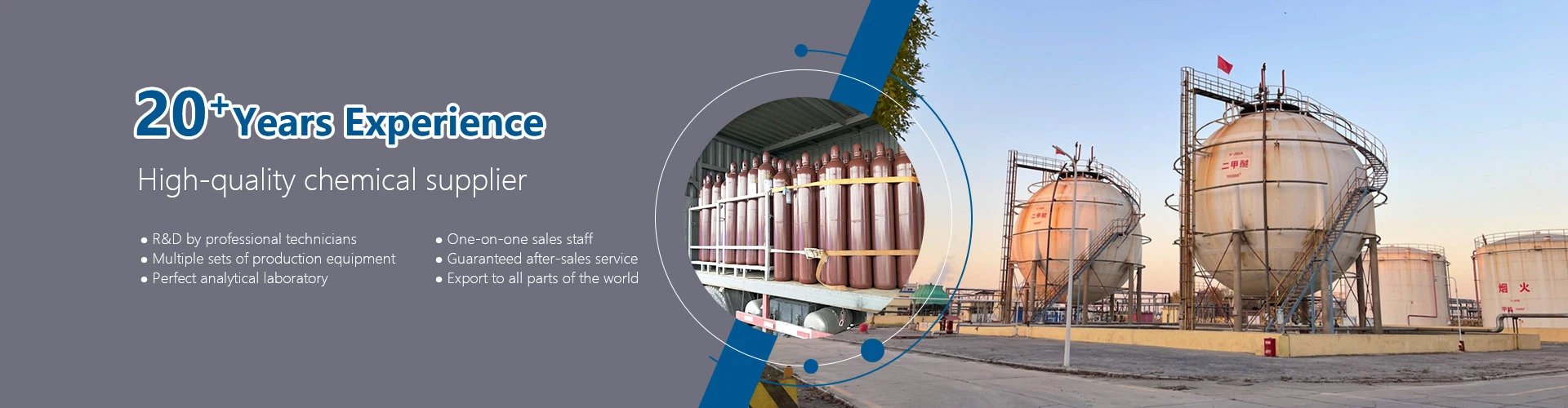
As a professional manufacturer of n-butane, ZL Energy deeply understands the pain points of high-end downstream customers. The separation of C4 components, especially the thorough removal of n-butane from isobutane and the removal of trace sulfides, requires extremely high column separation precision. ZL Energy, relying on its advanced high-efficiency distillation units with hundreds of trays and proprietary multi-stage desulfurization and dehydration processes, can "pull out by the roots" isobutane, olefins, and trace amounts of water and sulfur impurities from n-butane.
Through ZL Energy's precision purification, the purity of n-butane not only steadily exceeds 99.5%, but more importantly, the total sulfur content is suppressed below 1 ppm, and moisture indicators are far below national standard requirements, completely eliminating interfering impurities such as olefins. Choosing ZL Energy for direct supply means you are not just buying n-butane, but also the strict quality control endorsement of a source manufacturer. This makes your foaming formulation more stable, your refrigeration system more secure, and saves not just the middleman markup, but also high trial-and-error costs.


