

Under the dual goals of modern industry - environmental protection and efficiency, a hydrocarbon compound called cyclopentane is quietly emerging as an important raw material in the refrigeration and foaming industries. With the increasing global attention to ozone layer protection and climate change mitigation, cyclopentane, due to its unique environmental-friendly properties and physical characteristics, is gradually replacing traditional fluorocarbon substances and becoming a key player in the industry's transformation and upgrading.
The basic characteristics and production of cyclopentane
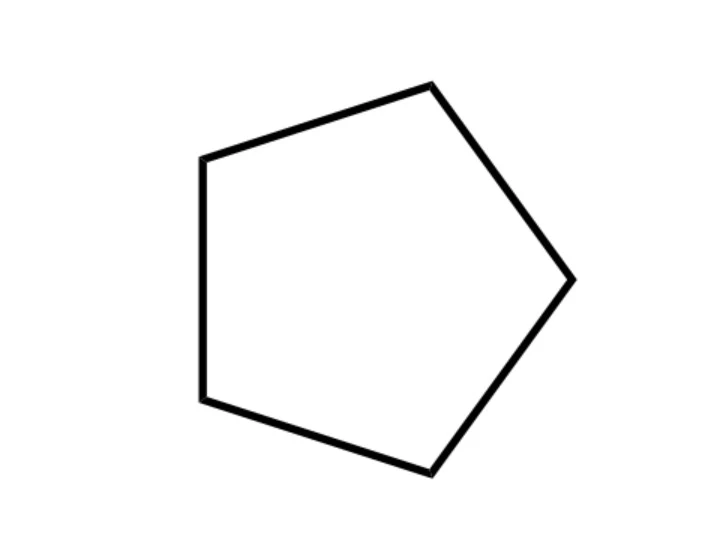
Cyclopentane (chemical formula C₅H₁₀) is a type of aliphatic hydrocarbon. At room temperature, it is a colorless and transparent liquid with a smell similar to gasoline. Its molecular structure is a five-membered ring, and this special structure gives it relatively high stability. In industrial production, cyclopentane is mainly obtained through catalytic reforming and separation purification of petroleum fractions, or can be extracted from certain natural gas condensates. With the advancement of process technology, modern production can achieve large-scale preparation of high-purity (usually ≥ 95%) cyclopentane, which lays a solid foundation for its industrial application.
In terms of physical properties, the boiling point of cyclopentane is approximately 49.2°C, and its freezing point is -93.9°C. These characteristics make it easy to store and transport at normal temperature and pressure. What is particularly important is that its ozone depletion potential (ODP) is zero, and its global warming potential (GWP) is only 11 (on a 100-year scale), which is much lower than the GWP value of the traditional refrigerant R134a (1430). This makes it an environmentally friendly alternative that complies with the requirements of the Montreal Protocol and the Kigali Amendment.
Revolutionary applications in the refrigeration industry
In the field of household refrigeration, cyclopentane is triggering a quiet revolution. Since the 1990s, the European Union has been the first to promote cyclopentane as a foaming agent for the production of insulation layers in refrigerators, freezers, etc. Compared to the traditional CFC-11 foaming agent, cyclopentane not only does not damage the ozone layer but also provides comparable insulation performance. Typical application cases include high-end household appliance brands such as Bosch and Siemens. After their products adopt the polyurethane insulation layer foamed with cyclopentane, energy consumption generally decreases by 10-15%.
As a refrigerant, cyclopentane demonstrates unique advantages in commercial refrigeration systems. According to data from the US EPA, the energy efficiency ratio (COP) of supermarket refrigerators using cyclopentane refrigeration systems can reach over 3.5, which is approximately 20% higher than that of traditional HFC systems. The cyclopentane compound refrigeration technology developed by Panasonic in Japan, by adding an appropriate amount of isobutane to optimize performance, has been successfully applied to convenience store refrigeration equipment, resulting in annual electricity savings of over 300,000 kilowatt-hours.
However, the flammability of cyclopentane (with an explosion limit of 1.4-8.7%) requires that the equipment must comply with the ATEX explosion-proof standard. The European Refrigeration Association suggests that places where cyclopentane systems are installed should be equipped with concentration monitoring alarm devices, which increases the initial cost by approximately 15%, but the investment can usually be recovered through energy savings within 2-3 years.
Technical breakthroughs in the polyurethane foaming industry
In the field of polyurethane rigid foam, cyclopentane has become the mainstream physical foaming agent. According to statistics from the China Polyurethane Industry Association, in 2022, the consumption of cyclopentane in the polyurethane industry reached 280,000 tons, accounting for 61% of the total foaming agent consumption. Compared with HCFC-141b, the thermal conductivity of the foamed boards produced by cyclopentane can be as low as 0.022W/(m·K), and the foam strength is increased by approximately 8%.
In terms of technological innovation, Honeywell developed the cyclopentane/water co-foaming technology. By precisely controlling the reaction temperature and the amount of catalyst, the closed-cell rate of the foam reached over 92%. Wanhua Chemical introduced a fast-release model cyclopentane formula, which reduced the mold turnover time by 30% and significantly improved production efficiency. These technological advancements have enabled cyclopentane foamed polyurethane to be widely used in fields such as building insulation boards and pipeline insulation layers.
In the automotive industry, components such as the foamed dashboard and seat cushions made of cyclopentane have passed rigorous tests by major automakers like Volkswagen and Toyota. The special flame-retardant cyclopentane foam used in the BMW i series electric vehicles maintains stable performance within the temperature range of -40℃ to 120℃, and also meets the UL94 V-0 fire safety standard.
The rise of cyclopentane reflects the overall trend of the industrial system's transition towards greening. Despite challenges such as safety and process thresholds, its excellent environmental performance and continuously improving application technologies are making it an important part of the sustainable development strategy. For industry participants, seizing the window of opportunity for technological upgrades of cyclopentane means simultaneously grasping the dual opportunities of economic benefits and environmental responsibility. In the next decade, as global efforts to reduce carbon emissions intensify, cyclopentane and related derivative technologies are expected to shine brightly in a wider range of industrial fields.


